
Lincoln Heights
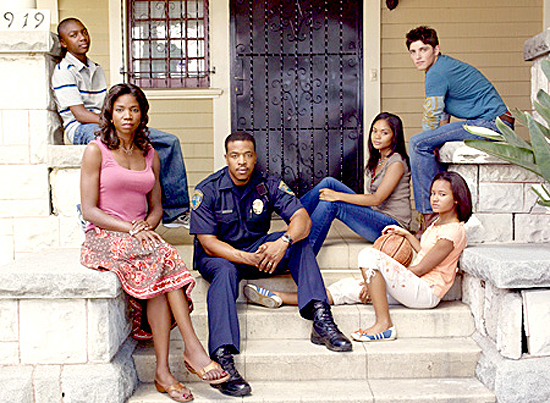
Lincoln Heights ABC Family Wins Gabriel Award
“It is rare for such a finely made TV show to come along this early in the new year.”
– Adam Buckman, New York Post
The Season One Hurdle
(Lincoln Heights Season One DVD liner notes)
The odds were stacked against us. There wasn’t a single dramatic television series on the air with a predominately black cast. Hollywood naysayers said shows like ours were guaranteed to fail–saying that they lacked broad audience appeal. Add to that, one-week before the first episode of “Lincoln Heights” was scheduled to shoot, there wasn’t one script ready. And to make matters worse, we were on a fledgling new cable network that didn’t bring to mind fresh, exciting TV fare. But what we did have going for us was that thing that poet, Robert Frost, said, “…has made all of the difference.”
As a predominately black family drama, “Lincoln Heights”, was in fact, the “road less traveled,” and nearly everyone involved in making the show shared in the wildly optimistic belief that we had to be a success. The fact that it was happening at all was a bit of a miracle, with a touch of serendipity and the generous amounts of luck that go with the green lighting of any TV series at all. So we hunkered down to create a show worthy of the eager, hungry, broad, specific and mainstream audience waiting for the uniqueness of “Lincoln Heights” to happen. We felt that we owed that to our audience and we owed it to ourselves to make an outstanding show, if in fact, there was ever to be another one like it. Even if we had one good season, people could point to “Lincoln Heights” to indicate that shows like ours could succeed.
So what made it work? In the process of getting a show on the air, no matter how brilliant the script, (and the pilot script was a great one, authored by Seth Freeman,) it matters not at all unless the network connects with the vision. In this case, ABC Family had a visionary new president, Paul Lee, who stepped outside the Hollywood comfort zone and made the choice that prognosticators said would surely fail. Paul was listening to other voices; he ordered the series on the strength of the characters– not the color of their skin. His “outside-the-dots” choice mirrored the sentiments of his young new audience, “the millennial generation” that actually likes their parents, cares about community, and is more colorblind than audiences in the past. The success of the show had less to do with old dictums than with ways of looking forward, shedding old images, telling new stories, and visually reflecting a world that the “millennials” connect with. Our millennial audience kept us on the air long enough for others to “catch up,” “cross over” and ultimately guaranteed another season “pick-up.”
There were other supporters along the way. There wouldn’t have been a “pick-up” had it not been for the talent and conviction of Kevin Hooks, the director of the pilot, who instinctively knew the value of the material, and how to take it several steps closer to the finish. His translation from script to screen had the rawness, humanity and love that made this family drama more than the usual sentimental, melodramatic stuff that the critics predicted it would be. We have worked with Kevin’s template visually and tonally ever since. He left us a wonderful road map as we struggled to keep “Lincoln Heights” from sinking into the predictable sameness of other family-oriented series, by giving voice to a rarely represented community with stories sometimes as violent as Lizzie’s kidnapping and other times, as peaceful as the prayers for her safety.
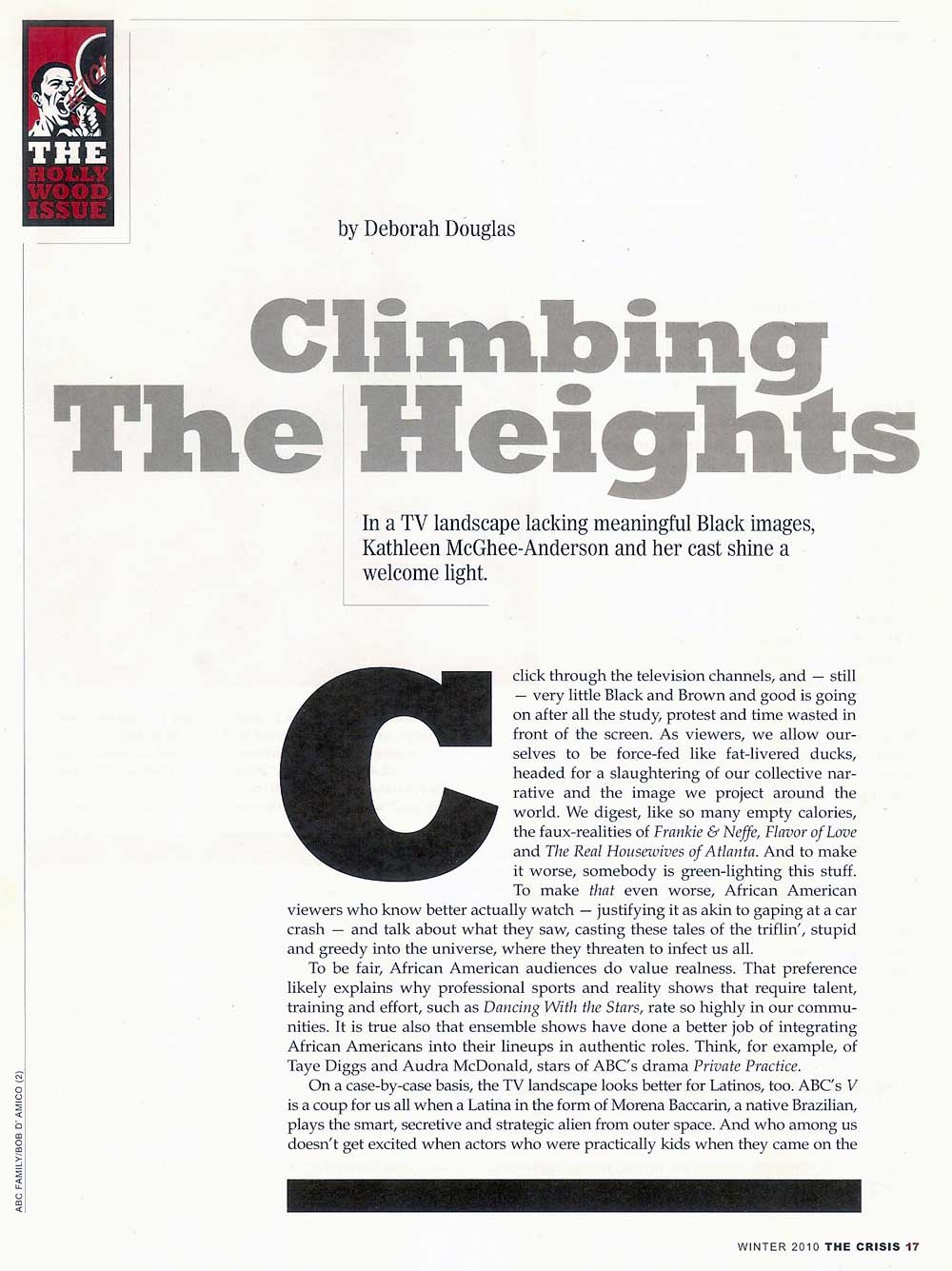
In conjunction with our very smart, forward thinking execs at the network, Kate Juergens and Mina Lefevre, our show was brilliantly cast with actors who were also keenly aware that they might not see material like this again for a long time. (Rumor has it that the very inspired idea to cast the Suttons as a black family came about some time into the process, thank you, Elizabeth Boykewich.) But who can imagine “Lincoln Heights,” without the transcendent power of Russell Hornsby, as uber-cop/ super dad, vigilantly protecting and loving his kids, a constant, fearless presence who every teenager sees as the ultimate father figure? Or the incandescent Nicky Michaeux as Jenn Sutton? Not since “The Cosby Show,” has an actress of any color, convincingly loved her onscreen man as much, and been such an equal partner in working and raising their obstreperous offspring. The seductiveness of Erica Hubbard and Robert Adamson, as the black, white and beautiful star-crossed lovers, Cassie and Charles; the charm and courageousness of middle daughter, Lizzie, fiercely portrayed by Rhyon Brown; and the quiet strength of younger brother Tay, struggling toward manhood, portrayed by pop singer/teen heartthrob, Mishon Ratliff– these marvelous qualities combusted onscreen to create a family that was real, relatable and fun to watch. And probably because the actors loved and supported each other so much off-screen, (starting with the pilot in San Diego,) was their connection onscreen so palpable, too. The first season of “Lincoln Heights” had more cop/ procedural elements than in subsequent seasons, and Eddie’s Irish partner on the force, Kevin Lund, portrayed by Michael Reilly Burke, gave just the right amount of acerbic distance and “got-your-back” loyalty to give our cop stories a touch of realism and a sense of family, too. And, in the end, that’s what “Lincoln Heights” is all about. Family.
I came onboard after the pilot was written, cast and shot and the series green lit– at that moment when everyone was ready to go– but where?
No scripts and one week before the camera rolled, with lots of work to be done, from sets to wardrobe to re-editing the pilot before airing, and getting to know the already hired writing staff, the cast and crew, designers, department heads, and production staff I’d inherited. My biggest fear as the new EP/Show Runner, was whether it was possible to ready a script for shooting and stay one step ahead of the script hungry production beast—ready to devour another 58 pages every 7-1/2 days. It would have been impossible had it not been for the fantastic writing staff I soon discovered was down for the cause; Larry Moskowitz, Yolanda Lawrence, Nelson Soler, Anthony Sparks, even my assistant, Elyce Strong, rolled up her sleeves and started writing, (earning her WGA stripes in the process.) We stayed close to midnight most nights writing, re-writing, boarding, re-boarding and going back to square one again and again. Often sleeping at the studio, for me, living and breathing “Lincoln Heights” for the first six months—until we made it to the finish.
Now here we are three years later, four seasons of a cable TV series that currently has no network peer. Looking back, most of it happened so quickly it’s a blur. What stands out most vividly are a series of quick cuts about a level of artistry that seemed to surpass most TV shows on fledging networks aimed at younger viewers.
– Music legend, Stanley Clarke’s music score on the level of his big screen film compositions.
– John Iavcovelli, the renowned Production Designer, coming onboard at the last minute and re-designing nearly every set—mirroring the greatness of his Emmy award winning previous work.
– Directors like Jessie Bocho, Seith Mann, and Michael Switzer bringing their film-making A-game to TV; collaborating with inspired film editors, Juan Garza and Mitch Stanley to earn us constant comparisons to “The Wire” (which I’ll always take as the ultimate compliment.)
– Kevin Inch, our Producer, stretching our finite budget in infinite creative ways to make our show look it had five times the budget, with action sequences and location shooting that made “The Heights” feel like a real neighborhood.
Now after four seasons, having won The Gabriel Award for Best Entertainment of 2008, nominated for countless awards including Image, Cable Fax, Naimic Vision, winning the DGA and the Image Awards for Best Directing, the Norman Lear Institute/Sentinel Health Award, with honors and critical acclaim and commendations for values including Family, but nothing more important than Diversity—which we hang our hat on, our show can proudly boast—we survived, because, in the end, we’re keeping it real. Hopefully, down the line it will rub off.
More Reviews
Lincoln Heights Wins 2008 Gabriel Award for Best Entertainment
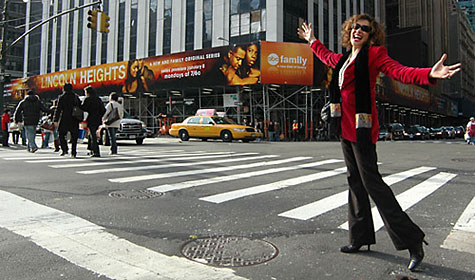
Kathleen in NYC
CONGRATULATIONS to Lincoln Heights Producers, Cast and Crew for a great Season Three and receiving 2008 Gabriel Award for Best Entertainment.
KATHLEEN’S STATEMENT:
I’m ecstatic about doing a new season of Lincoln Heights!
… It is indescribably empowering, not just for me, as the Executive Producer, but for all of us, audiences and artists alike. First, it disproves the often quoted, but antiquated wisdom that says a dramatic television series with a black family at its core, cannot survive. Secondly, it proves that TV viewers are smarter than the naysayers, (I always thought so.)
Lincoln Heights is a mirror of the real world, which is populated by people of all colors—trying their best to live together safely and harmoniously. We may move and vibrate to different rhythms but the beat of our hearts is just the same. The family at the heart of this show represents humanity not just ethnicity.
This second season portends the vision of many great writers, philosophers, politicians and gurus—who believe that one day people will be judged by the content of their character and not by the color of their skin. Those “better days” those “mountain top days” those “amazing grace days” are beginning to dawn. Our Lincoln Heights characters connect to an ever-expanding audience who want to see and be a part of this unique vision.
Producing these stories is what keeps me up late nights at the studio, to get up before sunrise some mornings, to work alongside an amazing cast, a great crew and a staff that is committed beyond simply having a gig in show business. This season we’ll try to live up to the task that ABC/Family has emboldened us with—to produce even more powerful episodes about something that really matters. Most of all, just trying to keep it real…
REVIEWS AND ARTICLES:
“ABC Family brings Lincoln Heights back. The Suttons will continue to stick it out in the old neighborhood.
ABC Family has renewed the family drama Lincoln Heights for a second season.
“We’re just in love with this show and truly believe it’s one of the best on television,” said network President Paul Lee. “It’s brought us the most diverse audiences ABC Family has ever had, and I can’
New York Post: Soulful ‘Lincoln’ Hits The Heights
By ADAM BUCKMAN
Finally, someone’s making a family drama for television that actually stands for something.
That someone is a producer/writer named Kathleen McGhee-Anderson, who is an executive producer (along with Kevin Hooks) of “Lincoln Heights,” premiering this week on ABC Family.
A native of Detroit who was educated at Spelman College and Columbia (where she received a masters in film directing), McGhee-Anderson has been involved for many years in producing and writing for TV shows and TV movies with “urban” (or black) themes – “Soul Food,” “South Central,” “Any Day Now,” “Educating Matt Waters” (starring Montel Williams), even “227” and “Benson.”
Her latest is this new, original drama about a middle-class African-American family in L.A.
Dad Eddie Sutton (Russell Hornsby) is a uniformed member of the Los Angeles Police Department and mom Jenn (Nicki Micheaux) is a registered nurse.
They have three kids – younger teens Tay (Mishon Ratliff) and Lizzie (Rhyon Brown) and older teen Cassie (Erica Hubbard).
As the series opens, they’re all living in a cramped apartment until the LAPD inaugurates an incentive program aimed at persuading its patrolmen to actually live in the precincts they patrol.
Under the program, the department will buy and pay for the renovation of a large, old home within the city limits. The catch is: The homes available are in sketchy neighborhoods.
One such neighborhood is Lincoln Heights, where patrolman Eddie Sutton decides to move his family. It’s a pretty rough area (their renovated home was just recently the neighborhood crack den), but it is also where Eddie grew up, and he dreams of helping to fix the neighborhood’s problems.
While the premise might sound sappy, the show isn’t. The problems in “Lincoln Heights” – poverty, drugs, crime, gang rule – are not going to be solved overnight.
In fact, in the first two episodes, Officer Sutton gets in hot water with community activists after fatally shooting a well-liked neighborhood youth (who just happened to be participating in a botched grocery-store robbery).
The primary reason the show works is because of its casting. Anchored by Hornsby and Michaeux (who sharp-eyed viewers will remember as a tough undercover cop on “The Shield”), this is a made-for-TV family that really feels like one – a rarity for TV drama.
It is also rare for such a finely made TV show to come along this early in the new year.